
Preserving the Past, Sustaining the Future: J & S Jetting Supports English Heritage Sites Across East Anglia
In the heart of East Anglia, where medieval ruins, stately homes, and storied castles draw thousands of visitors each year, the importance of ongoing site maintenance cannot be overstated.
Enter J & S Jetting, drainage specialists with a growing reputation for high-standard, reliable service. In partnership with Sykes & Son Ltd, a company with over 250 years of heritage refurbishment and maintenance expertise - J & S Jetting plays a pivotal role in maintaining several key English Heritage locations.
The Hidden Infrastructure of Heritage Sites
While much attention is (rightly) paid to masonry, conservation, and restoration, there’s a crucial component of heritage site preservation that remains largely unseen: wastewater and sewage management. Many of these historic sites are located in rural or semi-rural locations where mains sewer access is limited or non-existent. Instead, they rely on septic tank systems to manage waste safely and hygienically.
These systems must be regularly emptied and maintained to avoid overflows, odour issues, or worse, environmental damage that could threaten both public health and the surrounding ecology.
A Precision Partnership: J & S Jetting & Sykes & Son
The collaboration between J & S Jetting and Sykes & Son is a natural fit. With a shared commitment to operational excellence and sustainability, the two companies are currently overseeing the septic tank servicing at some of East Anglia’s most iconic heritage destinations:
- Castle Acre: A Norman-era site featuring monastic and motte-and-bailey remains, nestled in the Norfolk countryside.
- Audley End House: A grand Jacobean mansion and gardens near Saffron Walden, Essex.
- Orford Castle: Built by Henry II in the 12th century, this architectural marvel offers panoramic views of Suffolk’s coastline.
To support these historically sensitive environments, J & S deploys state-of-the-art 3,000-gallon vacuum tankers, capable of quickly and cleanly removing large volumes of wastewater without disrupting site activity.
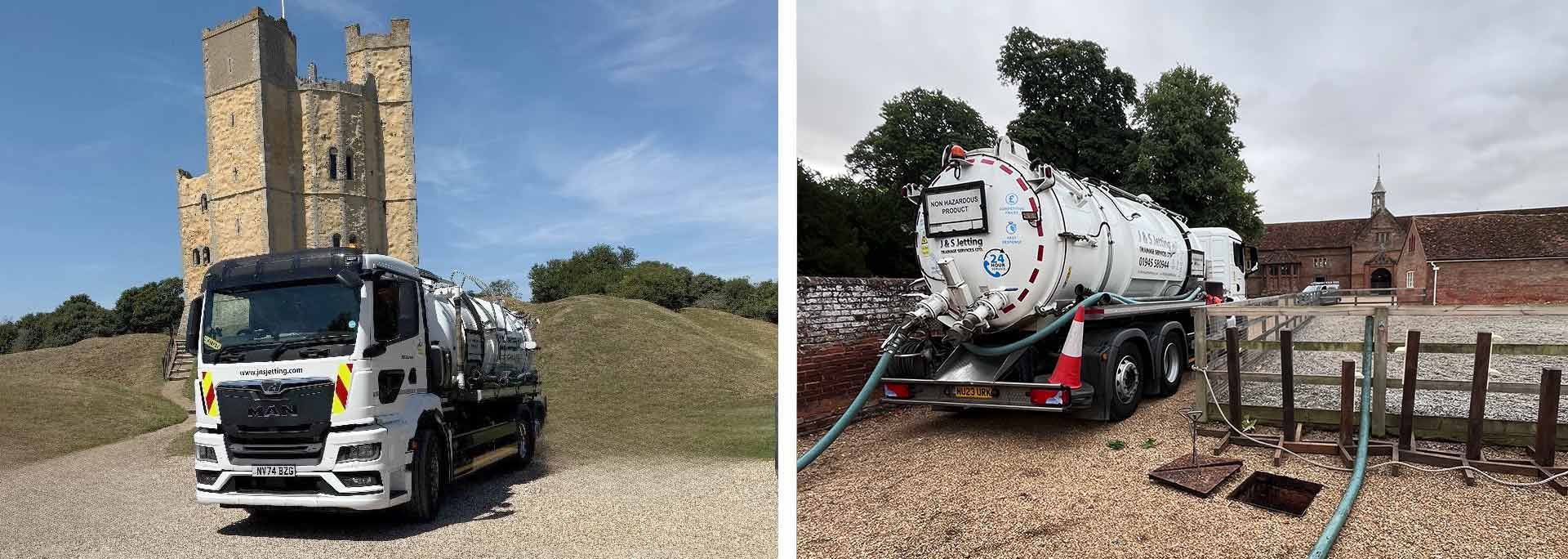
Minimising Disruption, Maximising Performance
One of the key requirements of working on English Heritage sites is operational discretion. Visitor experience and safety must never be compromised, and that’s where J & S Jetting’s professional approach shines. All waste removal is carefully scheduled during off-peak hours, to avoid clashing with tours or events.
J & S Jetting empties over 10,000 gallons of foul waste each month across multiple heritage sites. All collected waste is legally and responsibly disposed of through Anglian Water, ensuring full environmental compliance and peace of mind for both site operators and the public.
Preservation Through Prevention
Septic tank servicing might not be glamorous, but it’s vital to the integrity and safety of any site reliant on off-grid wastewater systems. Regular maintenance prevents blockages, overflows, and contamination - all of which could jeopardise public access, damage fragile ecosystems, or require costly remediation.
Thanks to J & S Jetting’s consistent, expert servicing, Castle Acre, Audley End, and Orford Castle remain open, welcoming, and safe for thousands of annual visitors.